Cinema: Can a Film Know Itself?
And can we see how that might be?
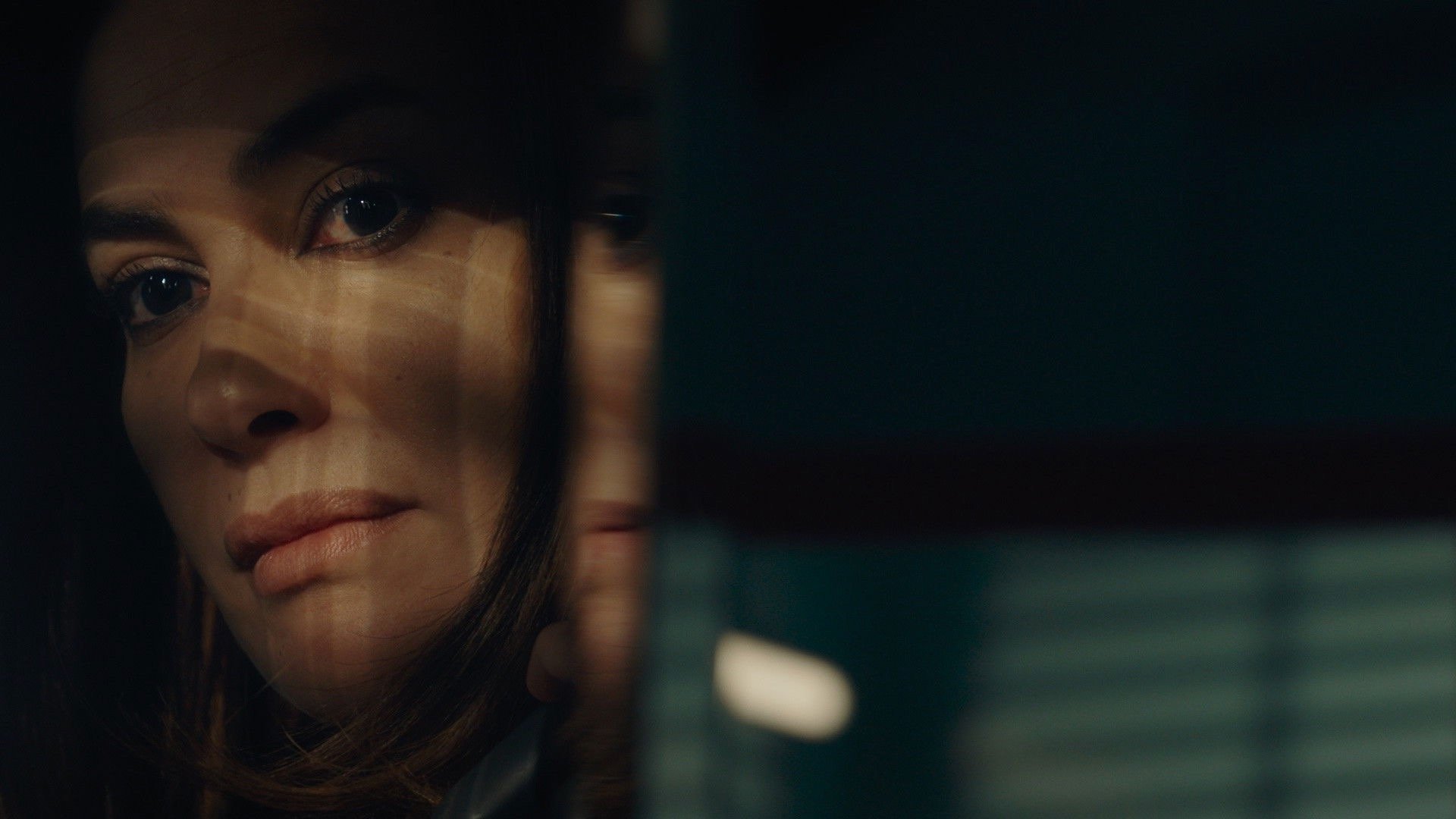
From FOUR DAUGHTERS Writer-Director Kaouther Ben Hania. Cinematography Farouk Laaridh
Let me begin by saying this: in exploring the nature of cinema, and in talking of specific films to illustrate specific points, in praising or castigating those movies, it’s easy to reduce film appreciation to some kind of adversarial team sport. (And now I find myself insulting team sport when there are sports and teams I enjoy and support.)
When that happens, the arguments and the insights get pushed to one side. Readers and fans simply stand by their favorite movies and reject whatever critical thought might be offered, one way or the other. Award seasons in particular seem to exacerbate this territorial frame of mind and with social media, the insults fly with abandon.
And yes, I admit I can prove as guilty as anyone of being reactive in this sense.
A way of ameliorating this, at least to an extent, might be for one’s commentary to avoid trashing anything. Commend the qualities of a picture maybe, but refrain from dissing one that, in our own opinion, falls short.
I say this first because I’m writing here about a concept that not everyone considers, perhaps wouldn’t so much as care about were they even to give it a second thought. Some of my friends don’t seem to get it at all and simply laugh at me when I mention it, as though my concern is down to little but eccentricity — and perhaps I have a touch of that.
When we care about movies, we can all get passionate about them. In addition, there are ways of considering them that some of us might care about and some might not. Skilled, seasoned filmmakers themselves might not go for what I’m about to get at. Many of you, writers, directors or not, may feel the same way. But for me, if it’s missing, this thing, I find I lose faith in a film. The movie seems lacking in a soul and can only evaporate…
To me, this thing matters… And as I explore it, I’ll try to avoid the adversarial angle by deliberately not being too specific about those movies I see as culprits.
I’m talking here about films I see as having what I like to think of as integrity. I’m not talking of moral righteousness, not of decorum, of elegance or formal neatness, nor of faithful adherence to some narrative or structural template, nor of cultural conformity.
I’m talking of any film that knows itself. One that knows what it is.
What do I mean by this?
Genre, or genres — there may well be more than one in such a work — plus style, voice, vision all cohere in one way or another. A movie may be culturally heretical, may be subversive, may be precariously or precociously innovative, beautiful or gritty but if it has this integrity, as I call it — because this is what it is — if its has this organic unity, you might say, and avoids being merely opportunistic, grabbing at any means to hand, genre-wise, tone-wise, narrative-wise (particularly plot-wise) to keep its drive going, it’s one I’m likely to appreciate.
What, by contrast, am I suggesting, falls outside this category?
A domestic drama, after forty minutes, after an hour, abruptly morphs into a horror movie. A noir mutates into a musical comedy — and yes, I’ve seen this. A cultural, social consciousness drama, with no foreshadowing, no previous hint, abruptly shifts, within a few frames, into a vampire movie while continuing to riff on everything under the sun. An “elevated horror” movie devolves into a shoot out at the last minute when it’s promised the world of cultural insight along the way.
Horror, indeed, one way or another, seems to offer a life (or death) raft for many a flailing drama.
Of course, a film can perfectly legitimately incorporate horror — body, psychological, under-the-skin horror — with family drama, with conspiracy thriller, and with ghost story. When the mix of genres is interwoven, when there’s connective tissue rather than arbitrary schisms, a film can come alive, finding itself through its cocktail of genre.
Perhaps in our age there can be no other way — I remember Tarantino, once upon a time in a Q&A commenting that there can’t be such a thing as pure noir anymore. We are just too knowing, he suggested. That innocence — which is what the ruthless machinations of films such as Double Indemnity, The Maltese Falcon, The Postman Always Rings Twice now seem to amount to — no longer works in a cinema so self-aware as ours, not to mention in a world of such monumental inhumanity it renders such minimally murderous canvases quaint by comparison.
No, there needs to be augmentation, expansion, subversion, reworking, other elements, other genres informing the noir spirit.
I once encountered a couple of filmmaking teachers — and good ones too — who insisted to their students that the fledging films they were about to make should settle for one genre only. I couldn’t believe it but then what I see as a reductionist approach is hardly uncommon, particularly in American movie-making pedagogy, at least as I see it. (And I’m both Brit and American). A film has to be one thing only, following one structure, three acts, five acts perhaps but usually three, in which the protagonist’s agency must ultimately prove more powerful than fate, since they always have to overcome their circumstances.
I see this as dogma, not what I mean by integrity.
The only rule, I believe, and it’s more of a principle, is that a film has to work. And even that can’t easily be nailed down…
Work how? In what respect? Well, I believe this organic unity thing I’m talking about, this integrity is exactly that. Not perfection. Not masterpiece. Just working as one, flaws and all, across its aspects, its tissue of connections and voice.
Everything works in and of itself, interfunctionally.
Coming back to my first point, movie fandom working as a team sport, any mention of contemporary or reasonably recent films in this respect might prompt readers’ put-downs, some indignant to say the least. So the thrust of the argument would go out the window.
But even before that, many would say, “Who cares, anyway? If a movie entertained me for a couple of hours, what does it matter? Who gives a monkey’s how it entertained me?”
Someone else might argue, “It touched on current issues, themes, agendas, grievances. What more do you want?”
Or “It’s only a movie. Chill out!”
I’m afraid that for me, I crave films that seek some sense of meaning. Not answers. Not messages. Not conclusions or reassurance. What keeps me engaged with a movie long after I’ve seen it, is the paradoxical, the contradictory. The film that at its end eludes easy explanations.
Aki Kaurismaki — OK, I’m mentioning a contemporary filmmaker — said that he makes his films to try to understand himself. Others might even make films to try to save themselves. (Love that!) Neither approach is ever going to work, of course. The artist is doomed and that’s the end of it. With this failure, though, can come resonance and success…
Now I’m going to contradict myself and mention a specific film. Kaouther Ben Hania’s Four Daughters tells the story of two of four Tunisian sisters who ran away to join Daesh in Libya. The filmmaker makes use of documentary material, scenes with the real mother and the two daughters at home, plus with actors playing them and playing the other lost daughters. All very metafictional with layers of fictionality plus the photos and archival materials one would expect from a factual documentary placed alongside the staged scenes — which are watched and commented on by the remaining family members.
The film, a formalist triumph, engages, distances, analyses, immerses the viewer by turns but holds its disparate elements together along the way. Consistent vision. For all of its aspects, a coherent narrative. No sudden lurching into genre horror. No sudden beams of light blasting through holes in the ceiling. No sudden zombies, vampires, or creatures of fantasy. Just the mess, pain, and soul of humanity and the cinema that captures it.
If this sounds somewhat academic, I’m sorely misrepresenting this powerful, compelling film. You don’t need to think think about it in the way I describe as you watch it. I didn’t think about this until after I’d experienced it. Because I find I only think about this integrity thing while watching a movie when it goes missing. Something’s out of place and the film never recovers because it turns out it doesn’t know what it is. The baseball becomes cricket or vice versa, the opera the pantomime. Then I start to ponder. Then I get analytical. Then the film is lost.
And although I deeply appreciate them, the film’ I respect are not my team, my territory, my identity, nor do they threaten anyone’s if they don’t care for them. Because this is cinema, which ever way you look at it and understand it, and cinema belongs to us all.
I ask only that if it’s of interest, you might consider thinking about movies now and again considering this notion of the integrity and unity in what I see as the best films.
Thank you for reading.
Peter Markham
April 2026